The Complete Guide to Floor Marking Tape for Warehouses
What Is Floor Marking Tape and Why Warehouses Use It
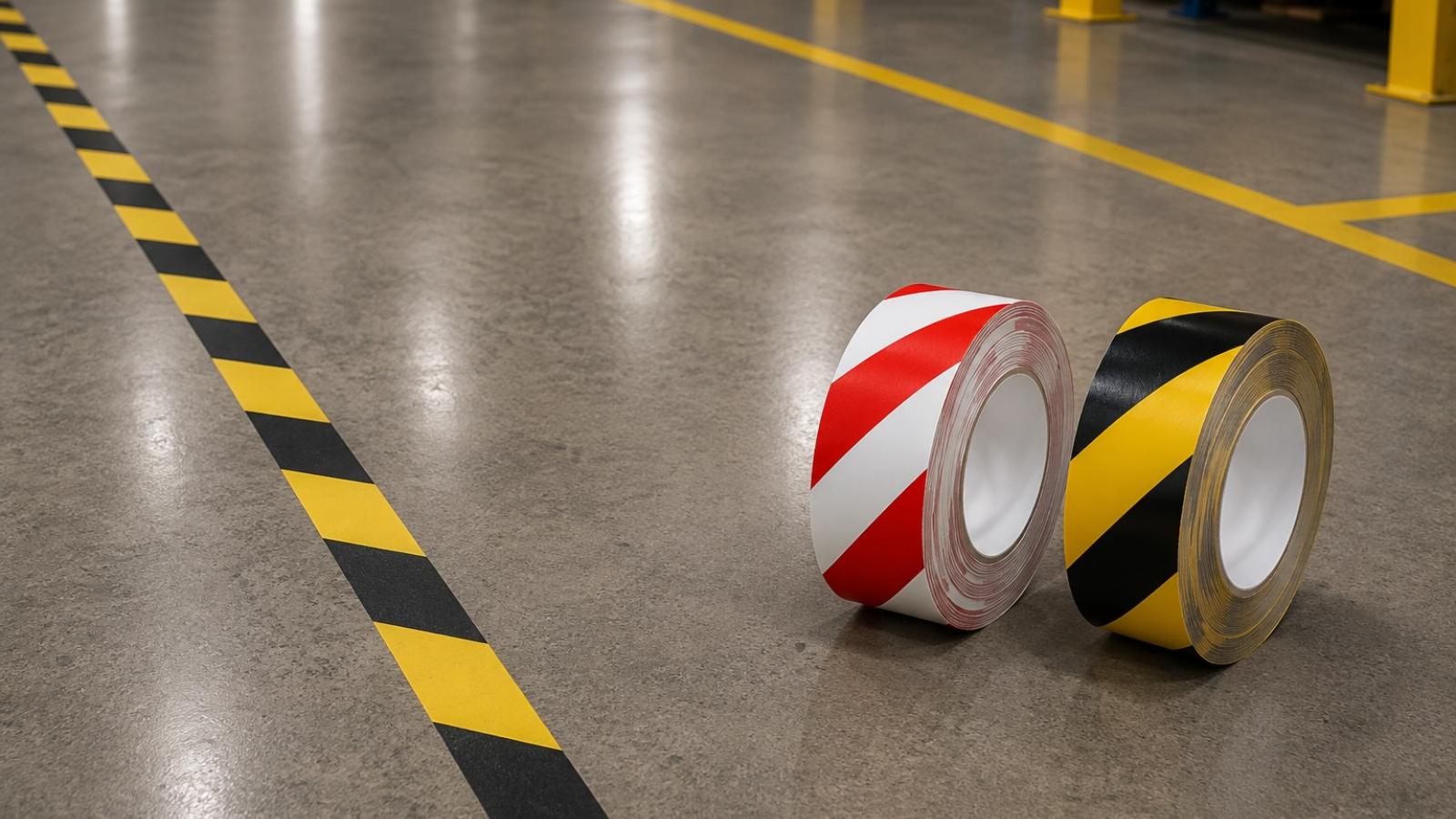
Floor marking tape is a self-adhesive tape used to define walkways, aisles, storage zones, hazard areas and equipment locations directly on a warehouse or factory floor. It's one of the simplest and most cost-effective tools available for improving safety and operational flow — a clearly marked floor reduces collisions between pedestrians and forklifts, speeds up put-away and picking, and supports lean or 5S-style organisation without the cost and disruption of repainting.Because it's applied directly to the floor rather than mounted or fixed, tape is faster to install and far easier to update than paint when a layout changes — a genuine advantage in warehouses where racking, workstations or traffic routes are periodically reconfigured.
Types of Floor Marking Tape
Standard PVC/vinyl tapeThe most widely used option for general aisle marking, zoning and 5S applications. It offers good durability on sealed concrete or resin floors under normal foot and light vehicle traffic.Heavy-duty or reinforced tapeDesigned for high-traffic zones where forklifts, pallet trucks or heavy trolleys cross regularly. A reinforced or laminated tape resists lifting, scuffing and edge peel far longer than standard vinyl in these areas.Anti-slip tapeTextured tape used on ramps, steps or areas prone to spillage, adding grip underfoot as well as visual marking.Photoluminescent tapeGlows in low light or during a power failure, commonly used to mark escape routes in line with emergency evacuation planning.Hazard (chevron) tapeDiagonal black-and-yellow or black-and-red striped tape used to flag physical hazards such as low headroom, floor-level obstructions or areas requiring extra caution.
Colour Coding: Building a System That Works
Consistency is what makes floor marking effective — a colour system only works if it's applied the same way throughout the site and everyone understands what each colour means. Most UK warehouses base their scheme on the same colour logic used in workplace safety signage, so markings reinforce rather than contradict signage employees are already trained to recognise:
Yellow — general aisle marking, caution areas and pedestrian walkways.
Black and yellow chevron — physical hazards such as obstructions, low clearance or trip hazards.
Red — fire equipment locations, fire exits and areas where access is restricted or prohibited.
White — general purpose lane and storage location marking.
Blue — mandatory action zones, such as areas requiring PPE.
Green — safety equipment, first aid points and safe routes.
Before rolling out a scheme, it's worth mapping the site and agreeing the colour logic in writing, so replacement tape, new starters and any signage on site all stay aligned.
Choosing the Right Tape for Your Warehouse Floor
The right tape depends primarily on how much traffic and what kind of traffic crosses that particular line. A quiet office storeroom and a busy forklift aisle have very different requirements, even though both might use the same yellow line:
Traffic type and volume — forklift and pallet-truck routes need a heavy-duty or laminated tape; low-traffic pedestrian zones can use a standard vinyl tape.
Floor surface — sealed concrete, epoxy resin and tiled floors all take adhesive differently; checking the tape is rated for your specific surface avoids early lifting.
Temperature and environment — cold storage and chilled distribution areas need a tape specifically rated for low temperatures, as standard adhesives can fail in these conditions.
Expected lifespan — higher-spec tape costs more per roll but needs replacing far less often in busy areas, usually working out cheaper over a year of use.
Application Best Practice
Clean and degrease the floor thoroughly before application — dust, oil and residue are the most common causes of early tape failure.
Apply at the temperature recommended by the manufacturer; adhesives generally bond poorly in cold conditions.
Use a floor tape applicator or roller to press out air bubbles and ensure full contact along the whole length.
Round or bevel corners where possible, as square corners are the first point of lifting under wheeled traffic.
Inspect marked areas on a regular schedule and replace tape as soon as it starts to lift, fade or scuff away, rather than waiting for it to fail completely.
Directa's Floor Marking Tape Range
Directa's Deemark floor marking tape range is built for exactly this kind of demanding warehouse use, with options suited to standard aisle marking through to heavy forklift traffic and cold storage environments. If you're planning a new layout or refreshing worn markings, our team can help you work out the right tape spec and colour scheme for your site.